
200 million streams later, Letoa remains committed to creative freedom

Online streaming services often receive a bad rap. But for some they can be an incredible tool for growth.
Not a lot of artists experience this in the way Letoa has. Initially building an audience on the back of aesthetic self produced releases, some of these tracks have now clocked over 40 million streams.
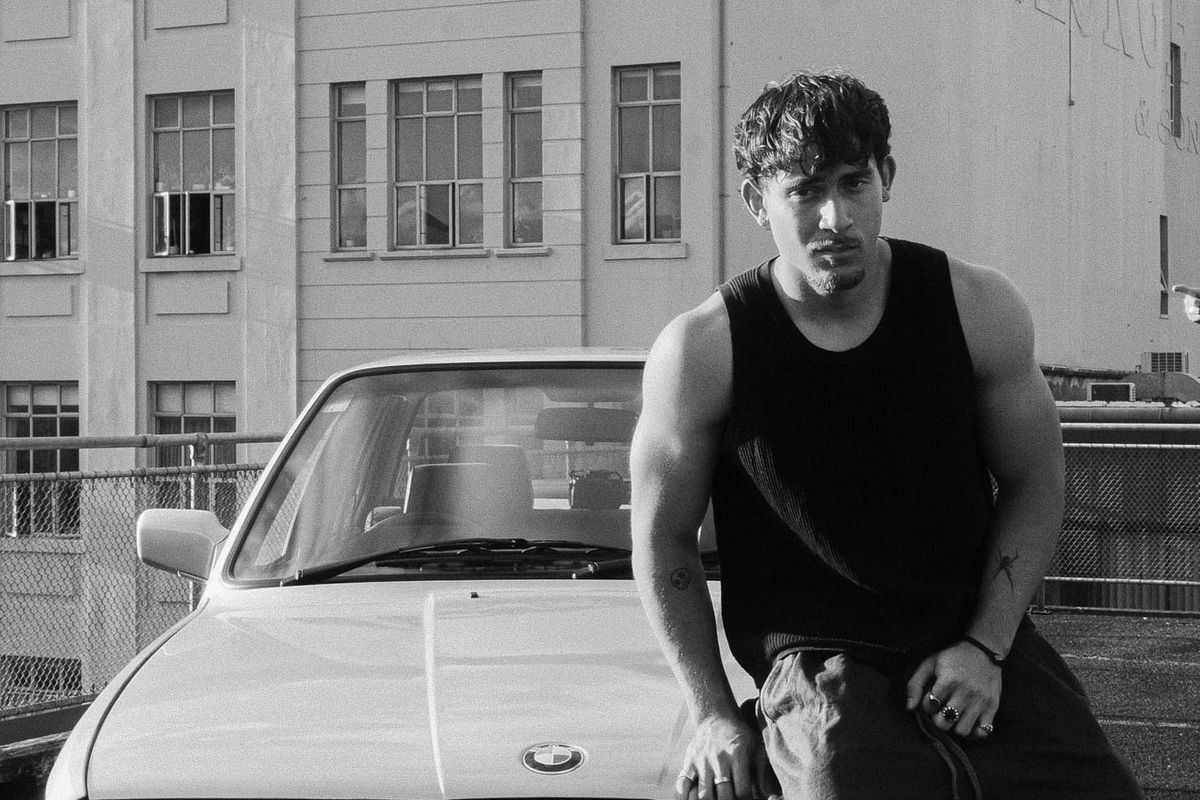
Recently releasing GLOCSTARR 2, the debut album - Letoa continues to deliver work that moves across genres while remaining rooted in his own artistic style. We got the inside scoop on the evolution of his release strategy, the value of creative freedom, and vision that underpins GLOCSTARR 2.
You've seen incredible online growth and streaming numbers. What do you think has made this happen?
To be honest, it's hard to say. The internet is such a fascinating and unpredictable place when it comes to promoting music or any kind of art, really. One day you might wake up to a hundred streams or views, and the next it's a million. Experiencing that kind of growth at a young age was definitely surreal.
If there's one thing I believe made the biggest difference, it's that I always made music I genuinely enjoyed making, alongside people I loved working with. We never tried to force anything or chase trends. We just focused on creating something that felt authentic to us. I think that sense of authenticity and not trying too hard really resonated with people, and that's what helped the music connect with a wider audience.
I also think community played a huge role. Coming up in the aesthetic rap scene, a lot of us artists were constantly featuring on each other's tracks, supporting one another online, and engaging with each other's music. It felt like a genuine community where everyone wanted to see each other succeed. Because we all grew together, our audiences grew together too, and that helped spread all of our music much further than any of us could have done alone.
Do you approach a release any differently now, compared to when you were starting out?
100%. Back when I first started, we didn't overthink anything. We'd finish a song, drop it, make one post about it, and that was pretty much it.
As I've evolved as an artist, I've gained a much better understanding of the business side of music. Now I put a lot more thought into every release and plan each rollout carefully to give the music the best chance of reaching people. That includes everything from playlist pitching and press outreach to creating short-form content and building anticipation before a song comes out.
I put everything I can into each release now. The way I approach it has definitely evolved, and I think that extra level of planning has made a real difference.
What makes being an artist meaningful for you?
For me, it's really about the freedom to create. My music isn't necessarily trying to tackle deep subjects or change the world, and I've never felt like it needed to. Sometimes music is just meant to be fun, and I think there's a lot of value in that.
I've always been a creatively driven person, especially back in high school. The artistic subjects were the ones where I felt the most freedom to express myself, and making music gives me that same feeling. Being able to sit down at my desk and make a song about absolutely anything I want is incredibly fulfilling. At the end of the day, it's that creative freedom that makes being an artist so meaningful to me.
Are you surprised with how your sound has spread since your early releases?
Yeah, definitely. Back in the early days of the aesthetic rap scene, we really weren't overthinking anything. We were just making music, having fun, and saying whatever came to mind. None of us expected it to grow into what it did.
Looking back now, it's incredible to see how much that community has grown. At one point, the sound became so popular that it felt like everyone was making that style of music, which was pretty surreal to witness. Even today, there's still a strong aesthetic rap community, and I'm proud to have been part of helping pioneer that movement.
As time has gone on, though, both the artists and the listeners have grown up. A lot of the original audience was younger, and as they've matured, many of us have evolved creatively as well. That's definitely been true for me. Even so, it still amazes me that I was able to have an impact on a particular sound within hip-hop. It's something I'm really grateful for.
You have described GLOCSTARR 2 as sonically varied. What holds the project together for you?
Visually, the project is tied together through a consistent black-and-white aesthetic across the artwork, photos, and music videos. I wanted everything to feel connected, even if the music itself takes you in different directions.
Musically, though, I didn't want to force everything into one sound. Every song has its own identity, and I intentionally sequenced the album so listeners might think, "What is this guy thinking?" That's kind of the point. I wanted the project to reflect how my mind works. One day I might feel like making boom bap, the next I want to make Memphis phonk, and the next I want to make a slow R&B track. I've always found it difficult to stay in one lane or stick to one style, so instead of fighting that, I decided to embrace it.
For me, the thing that holds GLOCSTARR 2 together isn't a single genre. It's the feeling. I've always cared more about the emotion and energy a song gives you than the specific subject matter. The lyrics aren't necessarily trying to tackle deep topics, but I hope people connect with the honesty of following whatever inspires me in the moment. I think there's something very human and relatable about that.
Which tracks from the album do you feel most proud of?
I'd probably say "Bounty" first. That was the first song I've ever released that I produced, mixed, and mastered myself, as well as writing it. That was a huge milestone for me because I'd always wanted to become self-sufficient as an artist, but getting to that point wasn't easy. I'm a perfectionist, especially when it comes to my own work, so it took a while to feel confident enough to put something out that I'd handled from start to finish. Getting over that hurdle has given me a lot more confidence to create on my own production going forward.
The other track would be "I Found a Reason to Hate You," which is the second-to-last song on the album. It's easily the most vulnerable song I've ever released. I don't usually write deeply personal music, but I was going through a breakup at the time and needed an outlet to process everything. I wrote the song the very next day, and as soon as I finished it, I knew it belonged on the album. It wasn't about trying to make a hit. It was about making something honest that helped me heal.
How do you want listeners to connect with this album in the long run?
I hope people come back to this album years from now and appreciate it for what it is. It's not a conventional album, and it definitely doesn't follow all the usual rules. Sonically, it's not built around one cohesive sound, and that was a conscious decision.
More than anything, I want people to listen to it and think, "He wasn't afraid to make the music he wanted to make." I didn't want to force myself into one lane or create something just because it was expected. I wanted the album to reflect who I am creatively, even if that meant breaking a few rules along the way.
I also hope it inspires other artists and musicians to trust their own instincts. The industry often makes it feel like there's only one right way to build a project, but I don't think that's true. If this album encourages even a few people to take creative risks and make the music they genuinely want to make, then I'd consider that a success.
What does the next creative step look like for you as an artist right now?
Now that I've had the freedom to break a lot of the rules creatively, I think the next step is seeing what happens if I challenge myself in the opposite direction. With GLOCSTARR 2, I embraced making whatever felt right in the moment, regardless of genre or convention. Now I want to see if I can create something that's more sonically cohesive while still feeling completely authentic to who I am as an artist.
I'm always evolving creatively, and there are already more projects in the works. I have a couple planned for the future, and each one is another opportunity to push myself in a different way. The goal now is to build a distinct sound that feels unmistakably mine and carry that consistently across an entire project. I want to prove to myself that I can make something cohesive without losing the creativity and freedom that define my music.
Have music you’re proud of? Submit it to Empty Spaces and get featured.