
Five years in the making, Hanne Jøstensen's EP holds onto distance and light
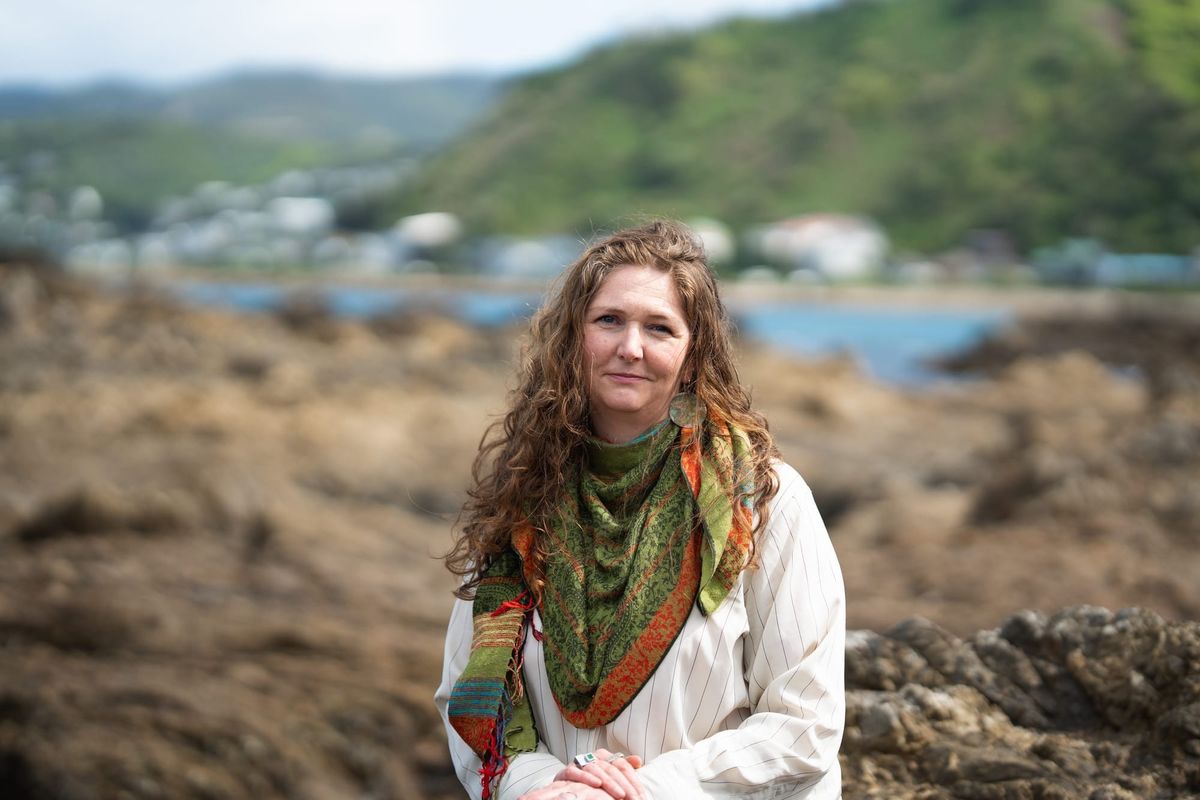
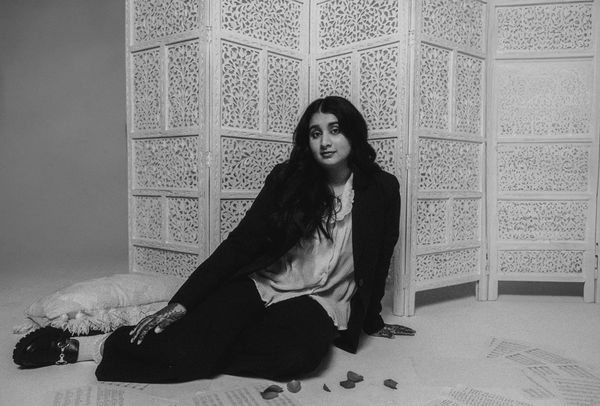
Hanne Jøstensen did not rush her EP into the world. She built it slowly, quietly, over years when life was pulling in different directions. The Lighthouse is shaped by patience. Carrying the weight of time, the notion of distance, and the focus of someone who chose to finish what she started.
Split between Norway and Wellington, Hanne's sense of home stretches across landscapes and languages. You can feel that in the music. It shows up in the tone, and the spaces between notes. Self produced and recorded with a close group of collaborators, the EP is considered and expansive, grounded in place but never confined by it. In Hanne’s own words, this record was urgent, even if it took five years to arrive.
This project took shape over five years. What held your focus across that time, and when did it start to feel complete?
A good mix of intrinsic and extrinsic motivation held my focus.
I was highly motivated to complete this. It’s 13 years since my debut, and I’d parked writing for years as I had enough on my plate with work and family. So when I got back into it, it felt urgent and important, even if it took five years!
In terms of extrinsic motivation, I went to seminars and retreats, and I also joined Charlotte Yates’ songwriting school, which meant weekly online sessions with a small group of like-minded people. This also gave me the opportunity to get feedback on my work, and kept songwriting in my calendar. Playing live helped lots, too, and just being around other songwriters and musicians. And then there was a handful of people in my inner circle who were true cheerleaders and who kept coming to my gigs and took an active interest in my music.
It took way longer than I wanted but by late 2024 I had rough arrangements for the songs that I could socialise with the musicians. We started recording in 2025. First studio session was 7 March, the day before International Women’s Day. That date felt significant. The EP was recorded and mixed over a nine-month period. I received the master files in December 2025. It was quite the Christmas present.
You’ve built a life in Wellington after arriving from Norway for a short stay. How does that dual sense of home show up in the sound and tone of The Lighthouse?
It’s integral to it. Through language as I sing in Norwegian and English, through an inevitable melancholy as your heart is split, but also through experimenting with more traditional Norwegian folk tones and bringing them into a more contemporary context and performed by New Zealand musicians on non-traditional instruments. For example, what’s considered Norway’s national instrument Hardanger fiddle versus the viola.
Place feels central to this record. From the Norwegian lighthouse to the south coast of Wellington, how do you translate landscape into music?
My piano teacher, Ian Logan, says that I compose like a singer. I think that comes through in many of my compositions. Maybe especially The Lighthouse and Polar Nights, where instruments nearly take on the characters or describe the landscape in the songs through their own melody lines.
For example, for Polar Nights, I envisaged vast, open, snowclad landscapes. Snow brings a muted stillness, but also makes every sound stand out because it mutes the background noise. So the instrumentation for Polar Nights tries to take that on through sparse but bright piano, viola that moves like the Auroras dancing across the sky, and a cello hanging at the end like ice crystals in the air.
You self produced the EP and worked with a close group of collaborators. How did you balance control with trust as the songs evolved?
It’s not so much about control for me, it’s more about creating an environment where people feel safe to explore and propose options, where their expertise can shine, and where it’s safe to change one’s mind. And to have fun. You know, creating the conditions for a high-performing team. Which is basically what I do in my day-job.
I think the two fundamental issues for me as a producer were firstly deciding on a sound in general when there are so many options and they’re all cool, and secondly, making detailed production decisions at an instrument level with confidence. For the general sound, I landed on quite an intimate acoustic and orchestral feel to the songs. This felt true to the nature of these songs, and was also a way to compose that came naturally to me.
In terms of more detailed arrangement decisions, I had prepared demos and draft scores, so that people knew the direction I wanted to take the songs in. The musicians involved are all extremely experienced and talented, and people I collaborate well with and trust. Jane Dalley and Susan Fullerton-Smith both play in Orchestra Wellington. Andreas Lepper is a wonderful, intuitive percussionist. Jim Walmsley, Paul Mouncey, Steph Casey, Martyn Galea are all composers and recording artists in their own right. I was open to their musical interpretation throughout, and tried to be respectful in my response if I felt that something didn’t serve the song. I think they all know how much I appreciate them, at least I hope they do.
None of this was a linear process. Everyone was very patient with me when I was asking them to try different things, sometimes only to land on what we had started out doing. That goes for the engineers, Lee Prebble and Josh Llewellyn, too, who were both fantastic to work with. But going through that process meant that we had explored different options and I was better placed to make informed production decisions.
Towards the end of the process, I started getting decision fatigue, and was just really grateful to be able to pick up the phone and discuss with the musicians. Also, Lee and Josh were really patient and helpful as I was agonising over details. I learnt so much through this process, and cannot stress enough the importance of working with people that empower you.
You’ve worked with some of these musicians previously. What shifts did you notice in those creative relationships this time around?
Since my first release, I’ve learnt a lot more music theory, so I was able to be more accurate in my communication with Jim and Martyn in particular, given that they play harmonic instruments with chords. My arrangements were tighter in advance this time. I still don’t think that’s necessary to make good music, but it made it easier for me to communicate my vision and understand my options. It’s like the difference between ‘I’d like it to clash, please’ and ‘how about a sus2 or a 9th there’? I was definitely more hands-on this time, but I hope in an enabling way. You’d have to ask them hahaha.
I also ran the final mixes via more musicians this time before approving them. I had a few calls in particular with Steph Casey getting her view towards the end of the process – again, the decision fatigue was real at this stage. In addition to having made a lot of decisions around the EP, work was busy, and Christmas was coming up. I was getting tired, too close to the work, and it was good to just talk stuff through with someone who I knew really cared about the work and me.
Wildflower tells a story from four points of view, sparked by a chance meeting. What drew you to that structure, and how did you shape each voice?
I met this young couple on a long-haul flight back to NZ. All three of us came from completely different cultures with different languages, but he and I shared English so he translated. They both struck me as incredibly reflective and there was an honesty to it that touched me to the core. We only met for 10 minutes - if that, but I couldn’t shake it when I got home.
Because each of their stories were so different, I wanted to give them each a voice in the song. So I wrote a verse for each of them, and then I imagined what it was like for her mum and gave her mum the chorus. My own perspective in the bridge was a result of a conversation where I was reflecting on how this brief meeting had impacted me and all the questions that I wished I’d asked. Peter Finley – my then songwriting school colleague – suggested I add my voice to the song. Which I did.
With this song in particular – actually for most songs on this EP – I spent a lot of time thinking about how to be considerate in my writing. I think all of us songwriters face this dilemma of what’s okay to write about and how to write about it in an okay way. It can be tricky to navigate; for some songs more than others. But I felt I was operating in a space of shared humanity with this song. I’m a daughter and a mum myself, and that would have influenced how I shaped the voices, too. The strength it takes to let someone go. Just the thought of it chokes me up.
There’s a strong sense of space across the EP. How did you approach arrangement and pacing to give the songs room to breathe?
One of my design principles when arranging the songs was ‘less is more’. When I was writing the scores I was conscious not to have the instruments compete against each other. The early arrangement for The Lighthouse became a bit bottom heavy, so I stripped some elements out. If something wasn’t adding anything critical to one of the songs, it was either not included in the initial mix, or removed in the final mixing stage.
Polar Nights was interesting in this regard. Coming from a choir and orchestra background, I’m used to tempo changes in music, and this song lent itself to a dynamic tempo to allow the necessary space between the phrasing in the verses. Lee set up the microphones for me to record piano and vocals simultaneously, which meant we’d have little opportunity to edit, but it was the right approach for this particular song. We tried recording the piano first, but that didn’t work for me. I had to sing it, and let the vocals lead the tempo.
You brought in a Norwegian choir with ties to your past. What did that moment mean to you, and how did it shape the final feel of the record?
Oh that’s hard to put into words. I spent years singing in acapella choirs with nearly all of the members of Apes & Babes, so I know them personally. They’re extraordinary vocalists. The fact that they took the time to rehearse the parts, which were difficult because the harmonies are tight but I knew that they could do them. We recorded them during their already packed rehearsal weekend, and trust me - it was special. Both Lee and I were so excited when the files arrived. He mixed them beautifully.
The choir adds contrast, an element of surprise, but also more of me. I think my music crosses genres, and this is an example of it.
Your work outside music centres on leading people through change. How has that experience shaped the way you write and understand story?
I think the main cross-over for me has been the project management and people side of it. I’ve led project teams, and the nature of my work includes engaging with a lot of stakeholders, helping prioritise what’s essential versus nice to have, and to be aware of risks and mitigations. Those are all transferrable skills that I’ve applied to the project management of this release. I didn’t consciously or rigidly apply much of this, I think it’s just how I tend to operate. Having said that, for the launch concert we’ll have a pretty tight run-sheet hahaha. Just as I wrote this, one of my pet rabbits chewed through my studio headphones cable, so I take back what I just said about mitigating risks.
When someone listens to The Lighthouse front to back, what do you hope stays with them after it ends?
Hope. The real human energy and connection that’s present in the recordings. And goosebumps.
Have music you’re proud of? Submit it to Empty Spaces and get featured.